The Strategy Behind Content That Reaches Millions - Grace Andrews
Published On: Jul 20 2026
Written By: Krishnan Sethuraman
Category: Content Creation
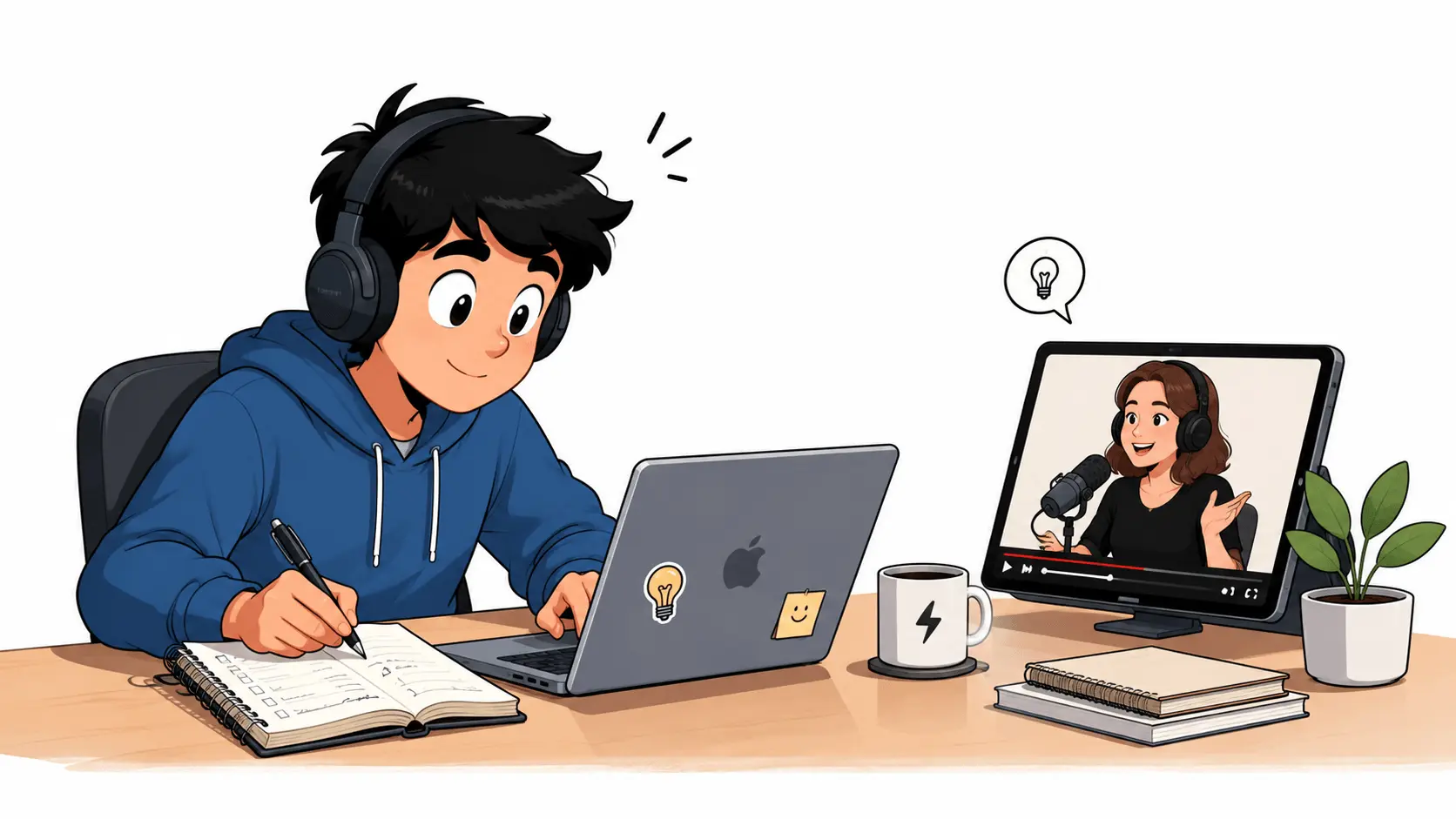
This weekend I watched an amazing podcast on content creation for business by the Anatomy of a dream and Grace Andrews. The podcast was amazing and has tremendous insights and strategies that can be applied to any kind of business. I have a lot of time learning this video and taking notes, which I have shared below.
Content Creation for Businesses — Reference Notes
A structured reference guide, compiled from podcast notes on brand content strategy.
1. The Core Mindset: Think Like a Media Company
Brands should approach content creation the way a media company approaches its audience — not the way a business approaches its product.
- Simply talking about your own topics, product, or services will not grow the business.
- People come to social media to relax, not to buy. Throwing ads at them doesn't work.
- Build entertaining content around the common problems your target audience faces (e.g., problems hoteliers face).
- Why this matters: entertaining, useful content carves your brand into people's memory. The next time they hit the problem you solve, they come straight to you.
Mental model: You are a media company that happens to sell a product.
2. Multiple Touch Points, Not One Channel
- The goal isn't "here's our logo, buy our product." The goal is to meet your audience as many times as possible, across as many platforms as possible (LinkedIn organic, LinkedIn ads, Google ads, etc.).
- Businesses have a business but don't understand attention. Content creators understand attention but don't have a business (which is why they monetize content instead). You need to combine both.
- "Build in public" is one option, not the only way to create content.
Personal Brand
- Building a personal brand builds trust faster — but is not mandatory.
- If you don't want to be on camera, you can build the same trust through someone else in your company.
- Key principle: people trust people, not logos.
- Craft a strong brand story and tell it again, and again, and again.
3. What Actually Matters: Discoverability → Trust
The real goal is discoverability. People can't trust you if they haven't found you first.
- People won't discover you on a single platform. You need many touch points across platforms so people can stumble onto you in different ways (e.g., an Instagram clip, a YouTube scroll, a WhatsApp forward).
The Funnel
| Stage | What Happens |
|---|---|
| 1. Attention | Discovery — being seen across multiple touch points |
| 2. Connection | They consume the content repeatedly; trust slowly builds |
| 3. Conversion | They come to you about the exact problem you solve |
- People rarely engage on first sight. They need repeated exposure or a share/recommendation before they start really consuming your content.
- The goal is not virality — it's consistent visibility in front of your desired audience, followed by relationship-building.
4. Content Must Drive Business Outcomes
Treat content like a science experiment — define upfront how you'll measure success.
- Views alone are not a valid success metric.
- Better outcome metrics: comments, shares, follows, DMs.
- High-view content that doesn't generate these outcomes = poor-performing content, even if it looks good on the surface. Diagnose and iterate.
Consistency + Experimentation
- Being consistent is necessary but not sufficient — consistency alone leads to a flat line.
- Hockey-stick growth comes from experimenting weekly while staying consistent.
- Stay on top of trends in your niche/target market.
Choosing What to Create
Simple sequence:
- Identify the goal.
- Decide what content type helps achieve that goal.
- Then create the content (not the other way around).
5. The "City" Framework for Planning Content
A useful mental model: treat your brand's content presence like a city that people choose to visit.
| City Concept | Content Equivalent |
|---|---|
| Why people visit a city (e.g., Agra → Taj Mahal / ancient architecture) | Your "Why" — the central reason people should watch/read your content |
| Destinations within the city | Destinations — the specific outcomes you want your audience to reach |
| Roads/paths to those destinations | Signals — the themes/proof points that move people toward the destination |
| Tourists | Passengers — your target audience for that destination |
| Places along the road | Stops — these are your actual content formats |
| City's event schedule | Timetable — your content calendar |
Critical point: Most people jump straight to deciding the content format first. The correct order is: Why → Destinations → Signals → Passengers → Stops (formats) → Timetable (calendar).
Worked Example
- Destinations (can have multiple):
- Increase demo request form submissions
- Reach more of the desired audience in English-speaking countries
- Signals (pathways toward "increase demo requests"):
- Increase credibility
- Demonstrate the ability to solve the problem
- Talk about topics the target audience genuinely values
- Stops (example format): To build credibility → customer testimonial videos (e.g., users of your product) drastically increase credibility.
6. Content Calendar (Timetable)
Example weekly cadence:
- 2 posts/week for credibility
- 2 posts/week for authority
- 2 posts/week for attention
Review cycle:
- Run this for a period → ask: "Have we gotten closer to our goal?"
- Yes → keep going.
- No → revisit and consider pivoting the calendar.
- Full strategic redo: quarterly — reassess how far your "passengers" have traveled on the journey.
Personal note (Krishnan): One month feels too short a review window — consider 2 months as the review cycle before judging results.
7. Meet the Audience Where They Are
- Find the groups where your target audience actually spends time (physical or digital) and speak their language.
- Example: find where hotel GMs "hang out" and get into those spaces.
- Keep auditing who's actually consuming your content. If content meant for GMs/Front Office Managers is mostly being seen by IT Managers, that's a targeting failure — experiment and adjust
8. Long-Form Content & "Memorable Minutes"
- People need to consume multiple pieces of content (n number of posts/reels/tweets) before they truly connect with and remember your brand.
- Trust can build gradually within a single long-form piece — someone can start at zero trust and be fully convinced by the time they finish a long article/video/podcast. This effect doesn't happen with short-form content, which is a key reason long-form content matters.
9. Consistency in Practice
- If you commit to a recurring format (e.g., a monthly newsletter on the 15th), do not skip it. Stay consistent and improve incrementally with each edition.
Personal note (Krishnan): Producing and releasing content consistently will be genuinely hard at first — but over time you can hire people, build systems, and delegate.
Case Study — Podcast Guest Outreach
- Podcast guest Grace Andrews shared that guest-booking was very difficult early on. Her team messaged 1,000 people every week, consistently, and that relentless volume eventually built a strong guest pipeline.
- Takeaway: scale + consistency compounds.
Case Study — Triangl Bikinis (Social Proof Strategy)
- Triangl Bikinis (Australian brand) wanted Kendall Jenner to wear their product but couldn't reach her directly.
- Instead, they gifted bikinis to her less-famous friends — soon her whole friend circle was wearing the brand.
- This indirect visibility eventually prompted Kendall Jenner herself to reach out and request one, wear it, and that became Triangl's breakout moment.
- Takeaway: Over time, social proof compounds — "my friend's company uses this, so I'll consider it too."
10. Execution Details That Matter
- Thumbnails and titles are just as important as the content itself — experiment with multiple variations.
- Hire top talent. It's fine not to hire at all, but if you do hire, hire the best.
- Do more than the standard — aim for excellence in everything.
- Remember: compounding consistency is the long game.
- Maintain a winner's mindset.
Quick-Reference Summary
- Think like a media company, not a product pitch machine.
- Be everywhere your audience is — multiple platforms, multiple touch points.
- People trust people, not logos — tell your brand story repeatedly.
- Measure success by comments/shares/DMs/follows, not just views.
- Consistency + experimentation = hockey-stick growth.
- Plan content using: Why → Destinations → Signals → Passengers → Stops → Timetable.
- Review monthly/2-monthly, redo the strategy quarterly.
- Long-form content builds deeper trust than short-form.
- Consistency compounds — especially in the hard early days.

Krishnan Sethuraman
Founder & CTO of Geedesk. Passionate about building software from scratch, launching SaaS products, and helping teams deliver enterprise-grade solutions.
Like what you are reading?
Discover more similar articles sent to your email
Subscribe to my newsletter